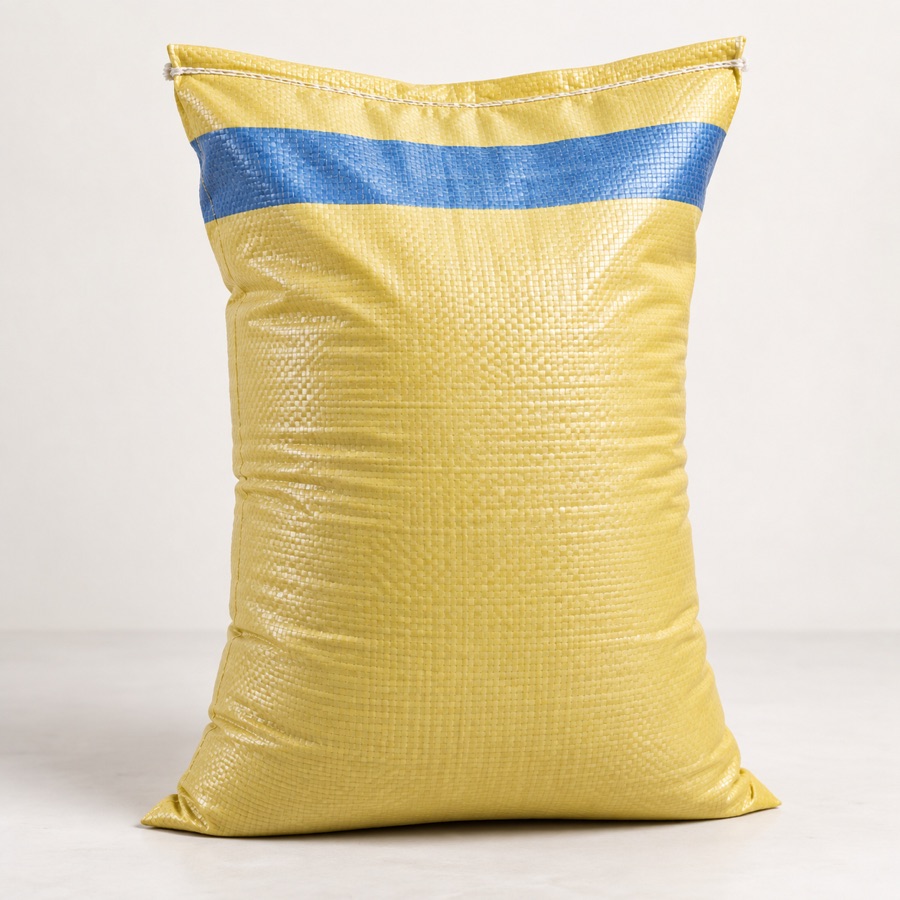
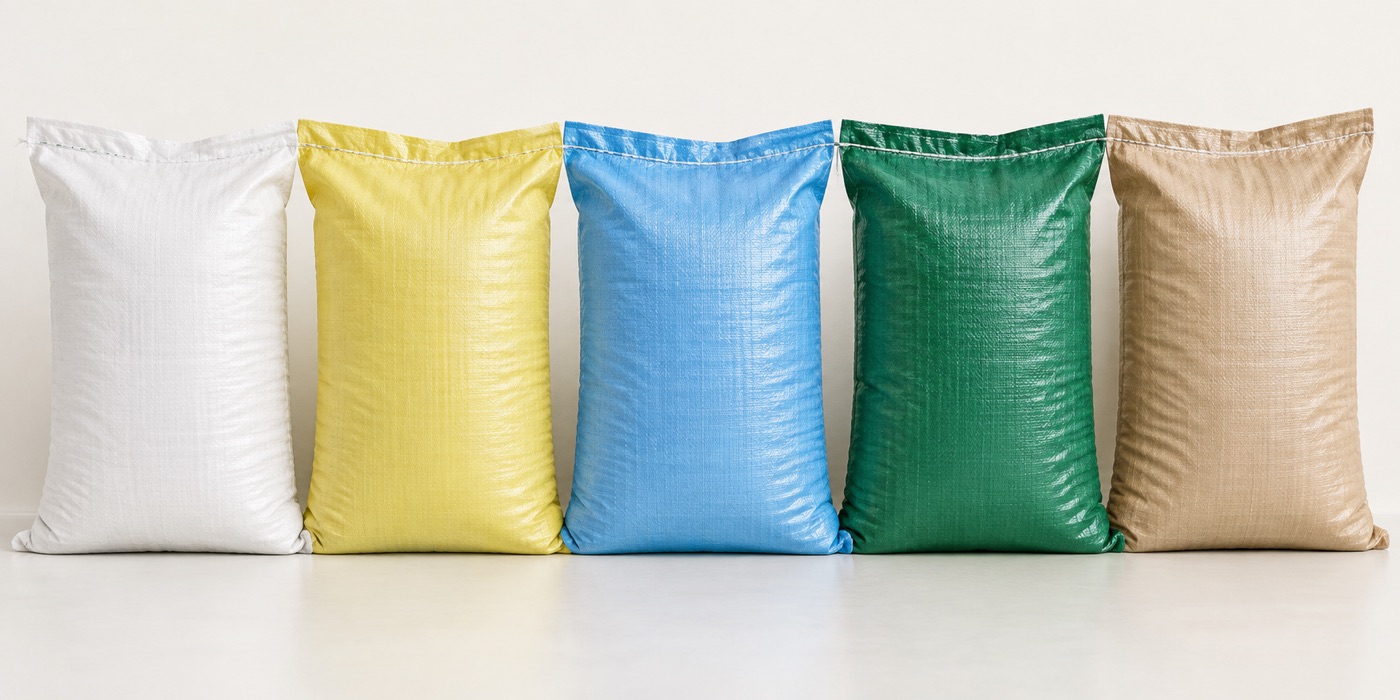
What makes a sack classic
Classic, in our catalogue, means the format we make most of rather than a
heritage product kept alive for sentiment. It is a woven polypropylene tube, cut
to length, with the sides folded into a gusset and the top hemmed before it is
filled. Nothing about it exists purely for decoration.
The construction is worth walking through, because each of those decisions is
doing a job. The woven tube gives the bag its strength: a grid of polypropylene
tape resists tearing in a way that a flat film cannot, because a tear has to
break a woven structure rather than run along a single sheet. The gusset turns
two flat panels into a shape with four corners, which is the difference between
a sack that stacks and a sack that slumps. The hem protects the top edge where
the fabric has been cut, and it gives the closure something to bite into.
Printing sits on top of all that and changes nothing structural. A classic
sack with six colours of printing on it is still a classic sack. That separation
between structure and appearance is useful to keep in mind, because the two get
confused constantly in specifications, usually to the cost of the buyer.
Where the classic format works
Honestly? Nearly everywhere. We would estimate that eight in ten of the sacks
that leave our building are variations on this construction, and the range of
products they carry is wide: blended fertilizer, urea, rice, pulses, resin
pellets, mineral powders, dried fish, construction aggregate and a long tail of
things we would not have predicted.
It works because woven polypropylene is a good compromise material. It is
strong for its weight, it tolerates being dropped, it resists tearing once
damaged, and it can be printed and stitched on ordinary industrial machinery. It
costs less per kilo of carried product than almost any alternative that offers
the same strength.
Where it stops being the right answer
Three situations regularly push people out of the classic format.
The first is moisture sensitivity. If the product cakes when it takes on
water, an uncoated classic sack is going to disappoint you in a wet season. That
is a lamination question rather than a structural one, and it should be decided
at the quotation stage.
The second is very fine powder. Below roughly 200 microns, material starts
working its way out through an open weave. A customer who receives a pallet of
sacks that have dusted the inside of a lorry is not a happy customer, and no
amount of the right fabric weight fixes it. That is a coated bag or a laminated
bag, full stop.
The third is a product that needs to breathe. Grain and pulses release
moisture as they settle, and sealing that moisture in with a coating or a film
causes a different set of problems. For those, the uncoated classic sack is the
correct engineering choice rather than the cheap one.
The default we recommend for a first order
Gusseted, 55 cm wide, 95 cm long, 80 gsm, uncoated, hemmed top, single-row
stitched, plain or one-colour print. That configuration has a very high chance
of working for almost any dry bulk product under 50 kg, and it gives you a
baseline you can judge every later change against. Buying a more complex bag
first means you will never know which part of it was necessary.
Fabric weights in the classic range
Fabric weight is the number that moves cost the most, so it is the one worth
getting right rather than generous.
Guidance only. The right answer depends on the abuse the sack takes
after filling, not on the fill weight by itself.
| Weight | Where it tends to be right |
|---|
| 55 to 65 gsm | Light fills, short journeys, dry goods that are handled gently and rarely stacked more than four high. |
|---|
| 70 to 85 gsm | The working middle of the range. Fertilizer, rice, pulses, resin and most mineral fills. |
|---|
| 90 to 105 gsm | Heavy fills, rough handling, repeated stacking, or anything that gets lifted by one corner. |
|---|
| 110 to 120 gsm | Long storage, export consignments and fills that stay in the bag for a season or more. |
|---|
Printing a classic sack
Because the construction is standard, the printing is where most of the
variation lives. Flexographic printing goes directly onto the fabric and handles
solid colour blocks and bold type extremely well. It handles photographs badly,
which is not a limitation of our presses so much as a property of the material:
you cannot reproduce fine tonal detail on an open weave.
Two or three colours is the sweet spot for a working sack. One colour used
confidently will look more deliberate than four used timidly. If your artwork
genuinely needs photographic quality, that is a laminated job and the
specification changes accordingly, so it is worth knowing before you order rather
than after.
Storing and reusing
Classic sacks are the easiest to store well because there is no film layer to
worry about. Keep them off the floor, out of direct sun and away from anything
that will compress them into a permanent crease. A pallet of woven sacks kept
indoors and rotated so the oldest stock moves first will still be in good
condition two years later.
Reuse is where the classic format earns its reputation. A plain woven sack
gets used two, three, sometimes four times before the fabric gives, which is a
genuine cost saving if your operation recovers bags rather than discarding them.
If reuse is part of your plan, mention it when you order. It changes which fabric
weight we would suggest, and sometimes it changes the closure as well.
How to tell you have specified it right
The test is not the specification sheet. It is a filled sack on a pallet,
left alone for an hour and then looked at honestly.
If the sack stands square without leaning on anything, the gusset and the
dimensions are right. If eight bags stacked on top of it leave the bottom one
unmarked, the fabric weight is right. If nothing has sifted out through the
closure overnight, the closure is right. If the print still reads from three
metres away in warehouse lighting, the design is right.
Four checks, and none of them need equipment. We run all four on every new
specification before we would recommend it to anybody, and we would suggest you
run them on the first delivery of any new bag, whichever supplier it comes
from.
The short version
Classic is not the cheap option or the safe option. It is the option that most
industrial packing actually needs, and the reason we make so many of them is that
the alternatives are usually solving a problem the buyer does not have.