
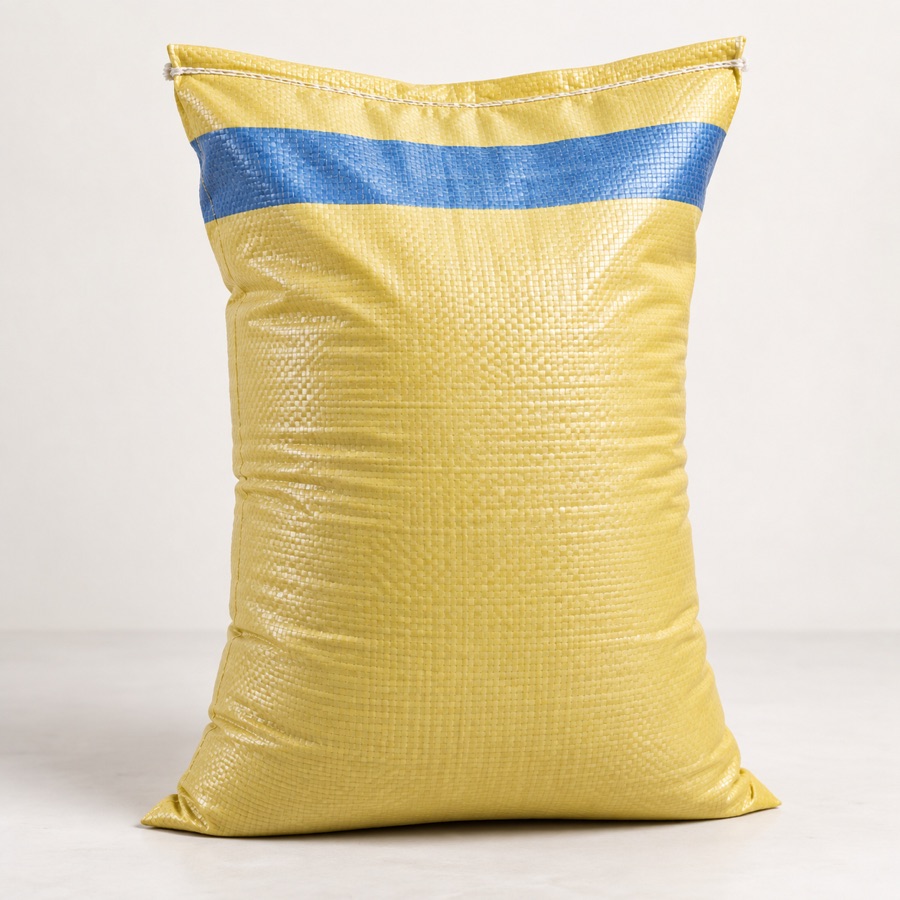
A woven sack is a deceptively simple object: a tube of plastic fabric, cut to length, closed at both ends. And yet almost every complaint we hear about bags traces back to six numbers that were chosen by habit rather than on purpose.
This is a working guide to those six numbers, written for the person who has to sign off a specification rather than for a design team.
Start with what goes in, not with the bag
Bags get specified backwards. Somebody finds the last sack they bought, measures it, and asks for the same thing again. That works fine when nothing about the product has changed, which is rarely true. A blend gets reformulated, a filling line gets replaced, a customer moves to a new warehouse with a lower ceiling, and the bag that was perfect two years ago quietly becomes the thing that is causing the problem.
The right starting point is the contents. Three properties of the material drive almost every other decision you will make.
- Bulk density. A 50 kg fill of urea takes up less space than 50 kg of puffed rice. The same weight in the same bag gives you two completely different sack shapes, and one of them will not stand up.
- Moisture sensitivity. Blended fertilizer pulls water out of humid air and then sets hard in the bag. Rice needs to release moisture as it settles. A sack built for the first of those is actively wrong for the second.
- Abrasion. Sharp-edged mineral powder and coarse granules grind at the inside of a woven bag on every journey. Fabric that survives fine sand for two years can be worn through by crushed stone inside one season.
Write those three down before anybody says the word "dimensions". They will settle more arguments later than any other piece of information on this page.
Fabric weight is the number people get wrong
Fabric weight is measured in grams per square metre, usually shortened to gsm, and after lamination it is the single biggest lever on the cost of a sack.
Woven polypropylene is made from flat tape woven into a grid. The weight of the finished fabric depends on how heavy that tape is drawn and how tightly it is packed. Our range runs from 55 gsm to 120 gsm, and the price difference between the two ends is substantial enough that it shows up in a tender.
There is a strong temptation to specify the heaviest fabric available, on the reasoning that a stronger sack is a safer sack. It does not work that way.
- A heavier fabric makes the sack stiffer. That can make it harder to place on an automatic filling line and harder to fold flat for storage.
- Over-specifying costs you money on every individual bag for as long as you buy them, and you pay freight on the extra weight as well.
- Past a certain point, the fabric stops being the weakest part of the sack. The seam becomes the weak point instead, and you have bought strength where it was not needed.
A 55 gsm sack with a badly made closure fails before an 80 gsm sack with a good one. Every time. We have watched that test run often enough to be confident about it.
The way we would approach it
Work out the abuse the sack will actually take, then specify the lightest fabric that survives it with a margin. If you have a bag that has already failed, send it to us and we will tell you which number to move. A failed bag is much more informative than a specification sheet, because it shows where the force went.
Width and length, and why five centimetres matters
A woven sack is made on a circular loom, so its width is set by the circumference of the fabric tube that comes off the machine. Cutting it to length is a separate step further down the line. Width is the expensive one to change.
On a palletised load, the width drives the footprint. A 55 cm wide sack laid flat gives you roughly a metre across two bags, which divides neatly into a standard pallet. Push that to 58 cm and the maths stops working: you lose the space you were trying to save and the stack becomes less stable. Buyers chase centimetres of length all the time and then wonder why their pallets lean.
Length is more forgiving. Adding three centimetres of length changes the proportions of the sack slightly, and if the fill is loose the sack simply settles into a different shape. Adding three centimetres of width changes the geometry of everything downstream of it.
Our advice: fix the width first, working back from the pallet and the filling line. Then choose the length that gives the filled sack the proportions you want. And check both against a real filled bag before you commit to twenty thousand of them.
Gussets decide how a filled sack stands
A flat woven tube filled with 50 kg becomes a pillow. Pillows do not stack.
On a pallet, a pillow-shaped sack rolls into the gaps around it, the stack settles unevenly, and you lose the top layers of every load to instability. The driver notices before you do.
A gusset folds the sides of the tube inward, so the sack has four corners instead of two. Fill it and it stands square. The difference is physical and immediate: a properly gusseted pallet of 50 kg sacks sits flat, stacks to a height you can predict, and fits a container without an argument at the loading bay.
Gussets use more fabric per bag and take an extra pass on the machine, so they show up in the price. Whether they are worth it depends on what happens to the sack after filling.
- Sacks that are filled and loaded loose onto a lorry straight away: gussets make very little difference.
- Sacks that are palletised, stacked and wrapped: gussets pay for themselves on the first load.
- Sacks that are stored for months and moved repeatedly: gussets stop being optional.
- Sacks that run through an automatic bag placer: talk to us first, because the gusset interacts with the machine and the wrong one will jam it.
A sack that will not stand up is a handling problem before it is a packaging problem, and handling problems are the expensive kind.
The closure is part of the bag, not an afterthought
Failing sacks almost never tear through the middle of a panel. They open at the seam.
There are three closures in common use, and your filling line usually decides which one you need.
- Stitched. A line of thread run through the folded top. Fast, economical, and it works with almost any product. Above 50 kg we would push you towards a double row of stitching, and it is worth the small difference in cost.
- Heat sealed. The bag is fused shut. Cleaner top edge, better containment for fine powder, and it is what a sealer on your line will expect. It needs consistent fabric weight to work well, so it is more sensitive to a cheap fabric than a stitched closure is.
- Valved. Powder filling lines push product in through a valve and the internal pressure closes it behind the fill. Standard on high-throughput cement, mineral and fertilizer lines.
Whichever you choose, ask for the seam to be tested rather than inspected. A stitched seam is the point where a woven sack has been deliberately cut open, so it is always where the failure begins. A stitch count on a specification sheet means nothing if the thread tension was wrong on the afternoon your order ran.
Lamination: when it earns what it costs
Lamination adds a film layer to the woven fabric. There are two options worth knowing: a hot-melt coating that is relatively inexpensive and gives you water resistance, and a laminated BOPP film that takes full-colour print and gives near-total moisture protection.
Lamination can roughly double the material cost of a plain sack. It earns that cost in three situations, and it is wasted money in the rest.
- The product is moisture sensitive. Fertilizer blends, cement, and any powder that cakes when it takes on water.
- The product is fine. Anything under roughly 200 microns will find its way out through an uncoated weave, and sacks that leak powder onto a customer's floor become somebody's complaint to you.
- The artwork needs it. Photographic detail and smooth gradients cannot be printed onto an open weave. A laminated film carries them properly.
Where it is wasted: heavy, dry, coarse goods that are kept under cover and moved quickly. Sand, gravel, resin pellets and dry construction aggregate will not care whether the fabric is coated, and you will have paid for a feature nobody benefits from.
One caveat is worth knowing before you decide. Lamination reduces a sack's breathability to almost nothing. For grain, pulses and anything that needs to release moisture as it settles, an uncoated sack is the correct engineering answer, not a cheaper compromise.
A worked example: the 50 kg fertilizer sack
Here is a specification we would put together for a blended fertilizer packed 50 kg at a time, palletised, and stored indoors for up to six months before it goes out on a lorry.
| Line | Value |
|---|---|
| Fill weight | 50 kg |
| Bag width | 55 cm |
| Bag length | 95 cm |
| Construction | Gusseted, hemmed top |
| Fabric weight | 90 gsm |
| Lamination | Hot-melt coated |
| Printing | Three colours, one face |
| Closure | Double-row stitched |
| Order quantity | 20,000, drawn down monthly |
Every line on that sheet is doing a job. The 90 gsm fabric is heavier than the contents strictly require, because a fertilizer sack gets picked up by one corner in a warehouse and a lighter fabric eventually gives up at that corner. The gussets keep the pallet stable through a whole warehouse chain. The coating keeps the blend dry through a humid season. The double row of stitching covers the point where the sack would otherwise fail first.
Now change one thing. Say the customer fills into a heat sealer instead of stitching. Fabric weight stays. Coating stays. The closure line changes, and the fold at the top of the bag changes with it. That is the level of detail a quote should be built from, and it is the reason two "identical" sacks from two suppliers can behave completely differently.
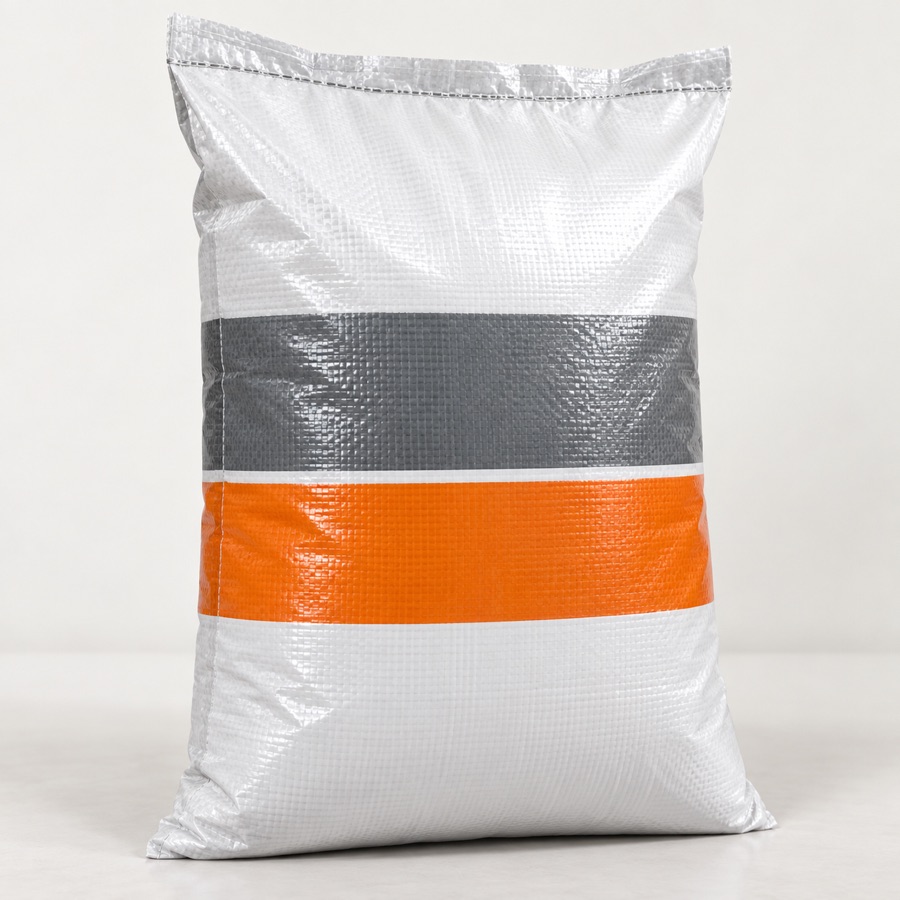
Six numbers on one line
If you take nothing else from this article, take these. They are the six numbers that decide whether the sack you order behaves the way you expect.
- Fill weight in kilograms, and the bulk density of the product it is filling with.
- Fabric weight in gsm, chosen from the abuse the sack will take rather than from a habit.
- Bag width in centimetres, fixed from the pallet and the filling head.
- Bag length in centimetres, chosen to give the filled sack the proportions you want.
- Construction, meaning gusseted or flat, and how the top is hemmed.
- Closure, meaning stitched, heat sealed or valved.
Two more sit just outside the list and matter almost as much: whether the fabric is laminated, and what the printing has to achieve. Decide those once the six above are settled, because both change the cost materially.
What to send us
Send those six numbers, or a photograph of the bag you use today, and we can quote properly rather than approximately. If you do not know one of them, say so. We would much rather ask two questions at the quotation stage than guess at a specification and have you find out what went wrong on a filling line at two in the morning.
If you have a sack that has already failed, send that instead. A torn bag tells us more about your operation than any form could.
Tagged
Not sure which of these applies to you?
Describe what you are packing and how it moves, and we will tell you which numbers actually matter for your sack.